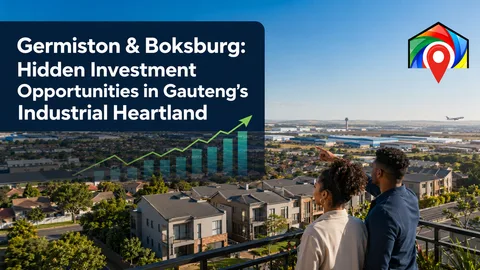


Lower borrowing costs have helped bring buyers back into Gauteng’s residential property market, and the East Rand is positioned to benefit because it continues to offer comparatively affordable apartments, townhouses and family homes near major employment centres.
However, buyers need to understand the latest interest-rate position before assuming that home loans will continue becoming cheaper without interruption.
South Africa entered 2026 after a cumulative 150-basis-point reduction in the prime lending rate from its recent peak, with prime reaching approximately 10.25% at the beginning of the year. This easing improved affordability and contributed to stronger buyer confidence and home-loan activity.
The situation changed during July 2026. The South African Reserve Bank raised the policy rate to 7%, bringing the prime lending rate to approximately 10.50%, as higher fuel prices and inflation increased pressure on monetary policy.
The most accurate interpretation is therefore not that interest rates are currently falling in a straight line. Instead, the earlier cutting cycle has already helped restart housing demand, while recent inflation pressure has introduced a pause—and a small reversal—in that affordability recovery.
For East Rand buyers, this creates a market that is more active than it was during the peak-rate period, but still requires cautious budgeting.
Why Interest Rates Matter So Much to Property Buyers
Most South African homebuyers use mortgage finance rather than paying the full purchase price in cash.
A change in the interest rate affects:
- Monthly bond repayments
- The loan amount a buyer can qualify for
- Household disposable income
- Buyer confidence
- The number of buyers entering the market
- Demand for entry-level homes
- Seller negotiating power
- Property-investment returns
- The choice between renting and buying
When interest rates fall, the monthly repayment on a variable-rate mortgage generally declines.
This can help existing homeowners manage their debt and allow prospective buyers to qualify for a larger loan.
It does not automatically make every home affordable. Municipal rates, levies, insurance, maintenance and transport costs remain important.
Did the Interest-Rate Cuts Restart the Property Market?
There are clear indications that lower rates helped revive South African residential activity during 2025 and early 2026.
BetterBond reported that home-loan applications increased by 14.6% year on year during 2025, with Gauteng and the Western Cape leading activity. The bond originator attributed the improvement partly to lower interest rates, improved confidence and reduced deposit pressure.
By June 2026, home-loan applications remained approximately 12% above first-quarter 2020 levels and recorded year-on-year growth of about 6% during the second quarter. BetterBond also reported stronger home-price growth among first-time buyers and the broader buyer market.
The July picture became more cautious. Higher rates and deposit requirements contributed to a modest quarterly slowdown, but applications remained 5.7% above levels recorded two years earlier, suggesting that the broader recovery had not disappeared.
This is particularly relevant to Gauteng because the province has remained more affordable than the Western Cape’s strongest coastal markets and contains a large supply of entry-level residential stock.
Why Gauteng May Benefit More Than Expensive Coastal Markets
Gauteng has experienced comparatively moderate property-price growth for several years.
That has been frustrating for some existing homeowners, but it has also preserved relative affordability for new buyers.
Ooba’s 2026 property outlook identifies Gauteng as one of the provinces showing renewed house-price momentum and increased buyer activity, supported by a strong first-time buyer segment.
Typical Gauteng prices remain highly location-dependent, but the province offers a wider range of affordable housing than premium parts of Cape Town and the Western Cape.
Current broad Gauteng price guidance places:
- One-bedroom apartments at approximately R800,000 to R1.2 million
- Two-bedroom apartments at roughly R1.1 million to R1.6 million
- Three-bedroom family homes at approximately R1.6 million to R2.4 million
The East Rand can provide opportunities below these provincial ranges, particularly in older sectional-title buildings, developing suburbs and more affordable towns.
Why the East Rand Is Well Positioned
The East Rand forms part of the City of Ekurhuleni and includes:
- Boksburg
- Benoni
- Germiston
- Springs
- Brakpan
- Kempton Park
- Alberton
- Edenvale
- Tembisa
- surrounding residential and industrial areas
The region has several advantages during an affordability-led market recovery.
Lower entry prices
Buyers can still find apartments, townhouses and selected freestanding homes below R1 million in parts of the East Rand.
Employment access
The region contains major manufacturing, industrial, aviation, logistics and commercial centres.
Transport connectivity
Residents can access highways, public transport routes, OR Tambo International Airport and the Gautrain through selected nodes.
Diverse housing stock
The market includes:
- Central apartments
- Secure townhouses
- Family homes
- New developments
- Retirement properties
- Large older homes
- Affordable township properties
- Investment units
Strong first-time buyer relevance
Affordable Gauteng markets tend to benefit earlier when lower borrowing costs bring first-time purchasers back into the market.
What the Rate Changes Mean for Monthly Repayments
A lower interest rate can produce a meaningful monthly saving, especially on larger home loans.
Consider a buyer financing R1 million over 20 years.
At an illustrative interest rate of 11.75%, the monthly repayment is approximately R10,840.
At 10.25%, the repayment falls to roughly R9,815.
That represents an estimated saving of approximately R1,025 per month, or more than R12,000 per year.
After the July 2026 movement to a prime lending rate of approximately 10.50%, the illustrative repayment would rise slightly to around R9,985.
These figures are estimates and exclude bank fees, insurance and other ownership costs. A buyer’s actual rate may be above or below prime depending on the bank’s assessment.
The example demonstrates two important points:
- The earlier rate-cutting cycle materially improved affordability.
- Buyers should not use the lowest recent rate as a permanent budgeting assumption.
Does a Lower Rate Mean Buyers Can Spend More?
Technically, lower repayments may improve the loan amount for which a buyer qualifies.
That does not mean the buyer should automatically increase the purchase budget.
A bank assesses affordability using factors such as:
- Gross and net income
- Existing debt
- Credit history
- Household expenses
- Employment stability
- Deposit
- Loan term
- Interest rate
- Property value
A buyer who qualifies for R1.5 million may be financially safer purchasing at R1.3 million.
The difference provides room for:
- Levy increases
- Municipal-rate increases
- Repairs
- School expenses
- Fuel and transport costs
- Insurance
- Future interest-rate increases
- Income disruption
The recent increase in the policy rate demonstrates why buyers need a repayment buffer.
What Does This Mean for First-Time East Rand Buyers?
First-time buyers are among the largest beneficiaries of lower borrowing costs because they are often more sensitive to monthly repayment changes.
At the start of 2026, BetterBond reported that the average deposit paid by first-time buyers had decreased by approximately 15% year on year, while the average first-time purchase price was slightly above R1.3 million.
Lower deposit requirements can make ownership more accessible, but a smaller deposit means financing a larger portion of the purchase price.
This may result in:
- Higher monthly repayments
- More interest over the loan term
- Greater exposure if prices fall
- Less immediate equity
- Potentially stricter bank pricing
Some qualifying first-time purchasers may obtain a 100% home loan. Such financing is more commonly associated with entry-level properties and strong credit profiles, but approval is never guaranteed.
Which East Rand Property Types Could Benefit Most?
Apartments below R1 million
Affordable apartments may see stronger activity from:
- First-time buyers
- Single professionals
- Young couples
- Airport employees
- Investors
- Buyers moving out of rented accommodation
Potential locations include parts of:
- Germiston Central
- Primrose
- Lambton
- Boksburg Central
- Ravenswood
- Comet
- Benoni Central
- Springs Central
- Kempton Park Central
- Birchleigh
- Rhodesfield
Apartments can provide a lower purchase price than freestanding homes, but buyers must examine the body corporate’s financial condition.
Two-bedroom townhouses
Townhouses often appeal to buyers who want security and private outdoor space without the cost of a larger house.
They may offer:
- Two bedrooms
- Secure parking
- A small garden
- Controlled access
- Lower maintenance
- Shared security
- Access to established suburbs
This category can be attractive to both first-time buyers and investors, supporting resale demand.
Entry-level freestanding homes
Parts of Springs, Brakpan, Germiston, Boksburg and township markets may offer freestanding houses at more accessible prices.
Buyers may obtain:
- More bedrooms
- Larger stands
- Garden space
- Expansion potential
- Cottages or outside rooms
However, older homes may need repairs, security improvements and municipal compliance work.
New developments
New developments can appeal to first-time buyers because selected projects may include transfer-related costs in the advertised purchase package.
Potential benefits include:
- Modern finishes
- Lower initial maintenance
- Energy-efficient fixtures
- Prepaid utilities
- Security
- Compact designs
- Developer warranties
Buyers should investigate the developer, construction quality, levies, future development phases and handover conditions.
Boksburg: What Lower Borrowing Costs Could Mean
Boksburg has a broad property market ranging from central apartments to established family suburbs and secure developments.
Potential entry and middle-market areas include:
- Boksburg Central
- Comet
- Ravenswood
- Witfield
- Parkdene
- Ravensklip
- Windmill Park
- Dawn Park
- Reiger Park
- Parkrand
- Eveleigh
- Beyers Park
- Bartlett
- Sunward Park
Lower borrowing costs can increase demand in Boksburg because buyers may be able to move from a small apartment to a townhouse, or from a townhouse into an entry-level house.
Likely beneficiaries
- Sectional-title apartments
- Two-bedroom townhouses
- Compact family homes
- New developments
- Homes near schools
- Property near industrial and airport employment
- Secure complexes with manageable levies
Higher-value suburbs may also experience improved activity, but affordability remains the primary driver.
Germiston: Affordability and Investment Demand
Germiston offers some of the East Rand’s most affordable apartments and older residential properties.
Relevant areas include:
- Germiston Central
- Primrose
- Primrose Hill
- Lambton
- Dinwiddie
- Elsburg
- Elspark
- Sunnyridge
- Klopperpark
- Marlands
- Castleview
- Tedstoneville
Lower interest rates can attract owner-occupiers who previously rented and investors seeking affordable units with potential rental demand.
However, Germiston requires detailed building- and street-level research.
An affordable apartment may be a poor purchase when the building has:
- High owner arrears
- Weak security
- Unpaid municipal accounts
- Poor maintenance
- Special levies
- Illegal occupation
- Inadequate insurance
- Low resale demand
The rate environment cannot compensate for a fundamentally weak property.
Benoni: Increased Access Through Sectional Title
Benoni includes premium neighbourhoods as well as accessible apartment and townhouse markets.
First-time buyers may consider:
- Benoni Central
- Rynfield apartments
- Northmead
- Crystal Park
- Cloverdene
- Brentwood Park
- Morehill
- Daveyton
- Alliance
- Actonville
Lower repayments may allow purchasers to enter stronger suburbs through an apartment rather than buying a freestanding home farther away.
This strategy may provide access to:
- Schools
- Shopping centres
- Healthcare
- Established neighbourhoods
- OR Tambo International Airport
- Future resale demand
Buyers must compare the monthly levy and municipal charges before deciding that an apartment is affordable.
Springs and Brakpan: More Space for the Budget
Springs and Brakpan remain important markets for buyers seeking freestanding homes at accessible prices.
Potential areas include:
Springs
- Springs Central
- Geduld
- Dersley
- Selcourt
- Selection Park
- Bakerton
- Modder East
- Kwa-Thema
- Casseldale
- Pollak Park
Brakpan
- Brakpan Central
- Brenthurst
- Dalview
- Minnebron
- Tsakane
- Geluksdal
- Leachville
- Dawn Park
- Sherwood Gardens
Lower interest rates may make larger properties in these areas affordable to households that would otherwise be limited to apartments closer to Johannesburg.
The trade-off may include:
- Longer commuting distances
- Greater maintenance
- Higher transport expenses
- Location-specific security concerns
- Older infrastructure
Buyers should compare the total monthly household cost, not only the bond.
Kempton Park: Airport-Related Demand
Kempton Park benefits from its proximity to OR Tambo International Airport, aviation employment, logistics operations and industrial centres.
Potential buyer areas include:
- Kempton Park Central
- Rhodesfield
- Birchleigh
- Birch Acres
- Norkem Park
- Terenure
- Edleen
- Croydon
- Esther Park
When borrowing costs decline, secure apartments and townhouses may attract:
- Airport employees
- Young professionals
- Investors
- First-time buyers
- Logistics workers
- Corporate tenants
The exact location matters. Aircraft noise, traffic and oversupply can affect value and rental performance.
Could Increased Buyer Demand Push Prices Up?
Yes, particularly in affordable segments where supply is limited.
Lower interest rates increase the number of buyers who can qualify for finance. When several purchasers compete for the same type of property, sellers may become less willing to negotiate.
BetterBond reported year-on-year price growth of approximately 9% for first-time buyer properties and 8.6% for the broader buyer market during 2026, although these national financing figures should not be applied uniformly to every East Rand suburb.
The strongest price pressure may occur in properties that offer:
- Purchase prices below R1.5 million
- Good security
- Low or reasonable levies
- Two or three bedrooms
- Secure parking
- Access to employment
- Fibre internet
- Minimal renovation requirements
- Reliable municipal services
Poorly maintained or overpriced homes may continue taking longer to sell.
Is It Still a Buyer’s Market?
The East Rand is unlikely to operate as one uniform buyer’s or seller’s market.
Conditions vary by:
- Suburb
- Price bracket
- Property type
- Condition
- Security
- Levies
- Building management
- Seller urgency
- Available stock
A well-priced two-bedroom townhouse may receive several offers, while an overpriced freestanding home may remain unsold for months.
Buyers may retain negotiating power when a property has:
- Been listed for a long period
- Visible repairs
- High levies
- An urgent seller
- Vacant occupation
- Outdated finishes
- Competition from similar listings
The broader market recovery means buyers should be prepared, but not pressured into overpaying.
Should Buyers Wait for More Rate Cuts?
Waiting may not always improve the outcome.
A future rate cut could reduce monthly repayments, but it could also bring more buyers into the market and support higher asking prices.
The Reserve Bank’s July 2026 decision shows that the rate outlook can change when inflation, fuel costs or international conditions deteriorate. Inflation reached approximately 5% in June, prompting the policy rate to be raised to 7%.
BetterBond’s July outlook suggested that a stronger rand and softer inflation could create room for relief later in 2026 or early 2027, but such expectations are not guarantees.
A buyer should purchase when:
- Income is stable
- Debt is manageable
- Emergency savings are available
- The property suits long-term needs
- The monthly cost is affordable at a higher rate
- The purchase price is supported by comparable sales
Trying to predict the exact bottom of the interest-rate cycle can result in missing a suitable property.
Fixed Versus Variable Interest Rates
Most South African home loans are linked to the prime lending rate.
A variable-rate loan changes when prime changes.
Variable rate
Potential advantages:
- The repayment falls when rates decline
- The buyer benefits automatically from future reductions
- It may be more flexible than fixing
Potential disadvantages:
- Repayments rise when rates increase
- Household budgeting is less predictable
Fixed rate
A fixed-rate period can provide repayment certainty, but the offered fixed rate may be higher than the current variable rate.
Banks may limit:
- The fixed period
- When a loan can be fixed
- Available rate options
- Early changes
Buyers should request written comparisons and understand the conditions before choosing.
How Much Buffer Should a Buyer Keep?
A sensible buyer should calculate affordability at a rate higher than today’s rate.
For example, a household could test whether the bond remains manageable if prime rises by:
- 0.50 percentage points
- 1 percentage point
- 2 percentage points
The buyer should also retain room for increases in:
- Electricity
- Water
- Municipal rates
- Levies
- Insurance
- Fuel
- School fees
- Maintenance
A home that consumes every available rand at the initial rate is not safely affordable.
What Existing East Rand Homeowners Gain
Earlier rate reductions lowered repayments for variable-rate borrowers and increased disposable income.
Homeowners may use the relief to:
- Pay additional money into the bond
- Reduce other debt
- Create an emergency fund
- Perform necessary maintenance
- Install backup utilities
- Prepare the property for sale
- Invest in value-adding improvements
Paying extra into a home loan can reduce the outstanding capital and total interest, subject to the loan agreement.
Homeowners should avoid treating every repayment reduction as permanent disposable income.
What the Recovery Means for Sellers
Improved affordability can increase the number of qualified buyers.
This may benefit East Rand sellers, especially those offering:
- Entry-level homes
- Secure townhouses
- Apartments in well-run buildings
- Properties near employment
- Homes requiring minimal repairs
- Correctly priced family houses
- Properties with backup power or water
- Homes with compliant additional accommodation
Sellers should still price according to completed sales rather than optimistic asking prices.
A recovering market does not justify an unsupported price.
What It Means for Investors
Lower financing costs can improve property-investment cash flow.
An investor using a bond may benefit through:
- Lower repayments
- Improved net rental income
- Increased tenant demand from economically active households
- A broader resale market
- More first-time buyer activity
However, investors face competition because lower rates also bring more purchasers into affordable markets.
Investors should calculate:
- Gross rent
- Net rent
- Bond repayment
- Rates
- Levies
- Insurance
- Maintenance
- Vacancy
- Property-management fees
- Tax
- Special levies
An investment should remain financially viable if rates rise.
What Buyers Should Do Before Applying for a Bond
Check the credit report
Identify missed payments, defaults or incorrect information.
Reduce unsecured debt
Credit cards, personal loans and vehicle finance reduce affordability.
Avoid unnecessary new accounts
Several recent credit enquiries can weaken the application.
Save a deposit
A deposit can improve the loan-to-value ratio and reduce the monthly repayment.
Prepare documents
Buyers may need:
- Identity documents
- Payslips
- Bank statements
- Employment confirmation
- Proof of address
- Tax records
- Details of expenses
- Business financials for self-employed applicants
Obtain prequalification
Prequalification gives the buyer a more realistic purchase range.
It is not a final loan approval, but it can prevent wasted viewings and unaffordable offers.
Compare multiple banks
Banks may offer different interest rates, deposit requirements and loan amounts.
A small rate difference can materially affect the total cost over 20 years.
What Buyers Must Check Before Signing an Offer
Before submitting an offer to purchase, investigate:
- Recent comparable sales
- Property condition
- Approved building plans
- Electrical compliance
- Roof and plumbing condition
- Municipal rates
- Levies
- Special levies
- Body-corporate finances
- Homeowners’ association rules
- Security
- Insurance
- Flood or ground risk
- Transport costs
- Internet availability
- Existing occupants
- Occupational rent
- Transfer and bond costs
An interest-rate opportunity should never replace property due diligence.
Common Mistakes in a Falling-Rate Market
Borrowing the maximum amount
Qualification does not equal comfortable affordability.
Assuming rates will keep falling
The July 2026 increase demonstrates that monetary policy can reverse.
Rushing because other buyers are active
Competition should not override inspection and valuation.
Ignoring total ownership costs
The bond is only one part of the monthly expense.
Buying a cheap apartment in a weak building
Poor scheme finances can result in special levies and weak resale value.
Using all savings for the deposit
Buyers still need emergency and maintenance funds.
Focusing only on the monthly repayment
A longer loan term can reduce the repayment while significantly increasing total interest.
Ignoring future needs
Selling again within a short period can be expensive because of transaction and moving costs.
Is Renting Still Better for Some Households?
Yes.
Buying may not be suitable when a household:
- Expects to relocate soon
- Has unstable income
- Has significant unsecured debt
- Has no emergency savings
- Cannot afford transaction costs
- Is uncertain about the preferred area
- Requires flexibility
- Would struggle with repairs and maintenance
Renting can provide time to improve credit, save a deposit and research East Rand suburbs.
Homeownership should improve long-term financial stability rather than create immediate financial distress.
Frequently Asked Questions
What is South Africa’s current prime lending rate?
Following the July 2026 monetary-policy decision, the prime lending rate is approximately 10.50%, while the policy rate is 7%.
Have interest rates been cut recently?
South Africa experienced cumulative reductions from the peak-rate period, with prime reaching approximately 10.25% at the start of 2026. The Reserve Bank subsequently raised the policy rate by 25 basis points in July, taking prime to approximately 10.50%.
Are rate cuts restarting Gauteng’s property market?
Earlier reductions contributed to improved affordability, greater confidence and stronger home-loan activity. However, the recovery is influenced by employment, lending conditions, inflation and property supply as well as interest rates.
Which East Rand buyers benefit most?
First-time buyers, affordability-focused families, townhouse purchasers and investors using mortgage finance may benefit most from lower borrowing costs.
Is now a good time to buy on the East Rand?
It may be suitable for buyers with stable income, manageable debt and a long-term plan. The decision should be based on personal affordability and the individual property, not only the interest-rate outlook.
Should I wait for another rate cut?
Another cut could lower repayments, but it may also increase buyer competition. Future rate decisions cannot be guaranteed.
Where can first-time buyers look on the East Rand?
Potential areas include parts of Springs, Germiston, Brakpan, Boksburg, Benoni and Kempton Park. The correct area depends on employment, transport, security and budget.
Can I get a 100% home loan?
Some qualifying first-time buyers may obtain full financing, particularly on entry-level purchases, but approval depends on creditworthiness, income and the bank’s criteria.
Does a lower prime rate reduce my existing bond?
A variable-rate home loan generally adjusts when the prime rate changes. The exact timing and calculation depend on the bank and loan agreement.
Final Thoughts
The earlier interest-rate cuts helped restart activity in Gauteng’s residential property market by lowering monthly repayments, improving confidence and allowing more households to reconsider homeownership.
Home-loan applications grew strongly during 2025 and remained above earlier levels during 2026, even as higher rates and deposit requirements caused some quarterly moderation.
The East Rand is positioned to benefit because it combines affordability with access to employment, transport, established suburbs and a wide range of property types.
Boksburg and Benoni offer apartments, townhouses and established family suburbs.
Germiston provides lower-cost sectional-title and renovation opportunities.
Springs and Brakpan can offer more space and selected freestanding homes at accessible prices.
Kempton Park benefits from airport, logistics and industrial demand.
However, the interest-rate environment remains uncertain. The policy rate increased to 7% in July 2026 and prime moved to approximately 10.50% after inflation reached 5%.
East Rand buyers should therefore treat the earlier cuts as improved breathing room—not permission to overextend.
The strongest purchase is a correctly priced property that remains affordable when rates, levies and municipal costs rise.
Explore East Rand Property on ZAP HUB
Discover apartments, townhouses, starter homes, family houses and investment properties across the East Rand on ZAP HUB.
Explore listings in Boksburg, Benoni, Germiston, Springs, Brakpan, Kempton Park and surrounding Ekurhuleni communities.
Compare available properties and connect directly with property professionals who understand the local market.
Start exploring East Rand properties on ZAP HUB today.
This article provides general property and home-finance information and does not constitute financial, legal, tax or investment advice. Interest rates, lending criteria, repayments and property prices may change. Buyers should obtain current quotations and professional advice before signing an offer or home-loan agreement.