

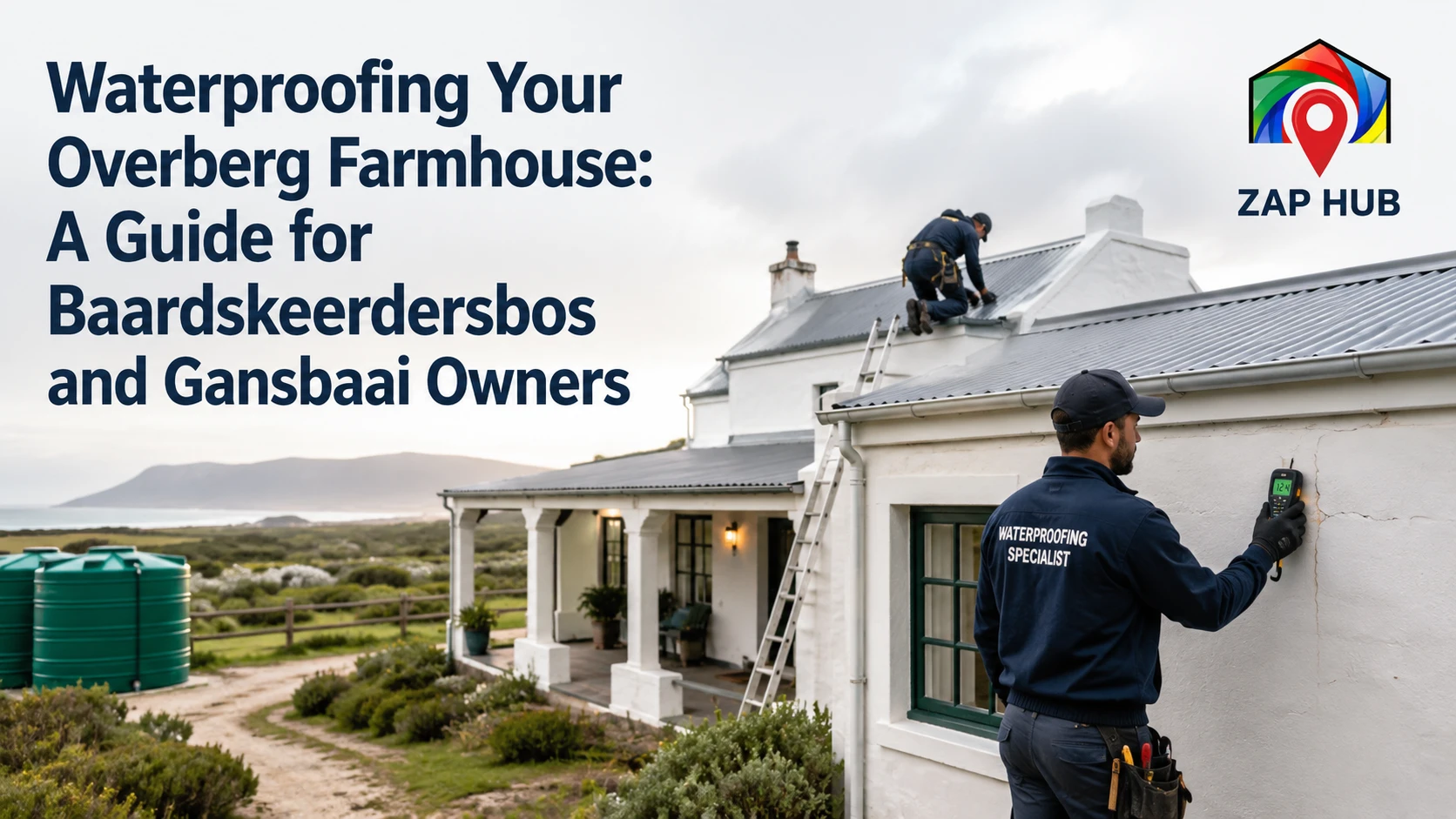
Owning a farmhouse in the Overberg offers space, privacy and a close connection to the landscape. However, properties around Baardskeerdersbos, Gansbaai and neighbouring rural areas may also be exposed to strong winds, seasonal rain, coastal moisture and changing ground conditions.
Waterproofing should therefore be treated as part of regular property maintenance rather than an emergency repair completed only after water enters the home. This is especially important when preparing a farmhouse for sale, accommodating guests or protecting an older building with traditional construction materials.
Homeowners who need assistance can browse property service-provider categories on ZAP HUB or search for property service providers who may assist with waterproofing, roofing, plumbing, drainage, painting and building maintenance.
Why Overberg Farmhouses Need Waterproofing
The Overberg includes coastal, agricultural and mountainous environments. A farmhouse near Baardskeerdersbos may experience different moisture conditions from a home closer to Gansbaai, Franskraal or De Kelders, but both can be affected by wind-driven rain and high seasonal moisture.
Common risk factors include:
- Strong coastal winds forcing rain into small cracks
- Ageing roof sheets, tiles or flashing
- Cracked exterior plaster
- Porous masonry or stone walls
- Blocked gutters and downpipes
- Water collecting near foundations
- Poor drainage around farm buildings
- Leaking water tanks or irrigation systems
- Failed balcony, stoep or patio waterproofing
- Condensation in rooms with limited airflow
- Ground moisture rising into walls
Older farmhouses may also have been extended or renovated at different times. Joints between old and new sections can become vulnerable when sealants, flashing or waterproofing systems deteriorate.
1. Inspect the Roof Before the Rainy Season
The roof is one of the first areas to inspect. Small defects can allow water into ceilings, timber structures, insulation and walls.
Check for:
- Loose or broken roof tiles
- Rusted or damaged roof sheeting
- Failed flashing around chimneys
- Loose ridge caps
- Cracks around roof penetrations
- Damaged waterproofing membranes
- Sagging or blocked gutters
- Downpipes discharging against walls
- Water pooling on flat roof sections
Farmhouses often have additions such as verandas, lean-to structures, covered stoeps and storage areas. Inspect where these roofs connect to the main building because water may enter at the junction.
A roofing or waterproofing professional should explain whether the problem requires a local repair, resealing, replacement of damaged materials or a broader waterproofing system.
2. Check Exterior Walls for Cracks and Porosity
Overberg weather can expose exterior walls to repeated cycles of rain, wind, sun and drying. Over time, coatings may become porous and cracks may appear around windows, doors and structural joints.
Look for:
- Hairline cracks in plaster
- Larger cracks around openings
- Flaking exterior paint
- Dark patches after rain
- White powdery deposits
- Damp marks on corresponding interior walls
- Failed sealant around frames
Do not apply exterior paint without repairing the underlying defect. Some cracks may require flexible sealing, while others should be assessed by a suitably qualified building professional.
The correct coating should also be suitable for the wall material. Traditional stone, brick and older plastered walls may require a different approach from modern cement construction.
3. Improve Drainage Around the Farmhouse
Waterproofing does not only involve roofs and walls. Poor ground drainage can direct stormwater toward the building and contribute to damp at floor level.
Inspect the property during or shortly after rainfall and check whether water:
- Pools beside exterior walls
- Runs toward doors or garages
- Collects beneath raised timber areas
- Overflows from tanks
- Moves from sloped land toward the house
- Remains trapped around retaining walls
- Flows from agricultural areas toward buildings
Possible improvements may include:
- Clearing drainage channels
- Correcting the slope of paving
- Extending downpipe outlets
- Installing suitable stormwater drainage
- Repairing retaining-wall drainage
- Redirecting tank overflow
- Maintaining trenches and culverts
- Keeping soil below appropriate wall levels
Drainage changes should be planned carefully so that water is not redirected toward neighbouring land, septic systems, access roads or another building.
4. Inspect Stoeps, Patios and Balconies
Covered stoeps and outdoor entertainment areas are important features of many Overberg homes, but tiled surfaces and concrete slabs can allow water into adjoining rooms when waterproofing fails.
Warning signs include:
- Loose or cracked tiles
- Failed grout
- Water marks below a balcony
- Damp along interior floor edges
- Peeling paint beside patio doors
- Cracks where the slab meets the wall
- Water collecting instead of draining away
Replacing grout alone may not solve a failed waterproofing membrane. A contractor should identify whether the surface requires resealing, tile removal, membrane replacement or improved drainage.
Complete these repairs before installing new flooring or repainting interior walls.
5. Protect Windows and Doors from Wind-Driven Rain
Strong wind can force rain through gaps that may not leak during calm weather. This is particularly relevant to exposed rural and coastal properties.
Check:
- Sealant around frames
- Cracks in window reveals
- Damaged timber frames
- Corroded metal frames
- Door thresholds
- Flashing above openings
- Gaps where extensions meet the original house
Water stains beneath windows may be caused by failed seals, but they can also originate from cracks higher on the wall. Avoid assuming that the nearest visible gap is the only source.
A controlled water test may help locate the entry point, but it should be conducted carefully to avoid increasing damage.
6. Address Rising Damp and Floor-Level Moisture
Moisture near the base of walls may be associated with rising damp, plumbing leaks, external ground levels or water collecting beneath the floor.
Possible signs include:
- Swollen skirting boards
- Flaking paint near floor level
- Salt deposits on walls
- Musty carpets
- Lifting laminate flooring
- Damp cupboards
- A visible horizontal moisture line
Rising damp requires specialist diagnosis. The appropriate treatment depends on the wall construction, existing damp-proof course and source of the moisture.
Do not replace skirting, plaster or flooring until the cause has been addressed and the area has dried sufficiently.
7. Check Water Tanks, Pipes and Farm Systems
Farmhouses may rely on water tanks, boreholes, pumps, irrigation lines or external plumbing. Leaks from these systems can create moisture problems that resemble rain penetration.
Inspect:
- Tank bases and overflows
- Pipes entering the house
- Pump connections
- Outdoor taps
- Irrigation lines near walls
- Geysers and pressure-control valves
- Pipes beneath kitchens and bathrooms
- Septic and greywater systems
A small continuous leak can keep soil saturated beside a foundation. Repair damaged fittings promptly and ensure overflow pipes discharge safely away from buildings.
A plumber or leak-detection specialist can assist when the source is concealed. Relevant providers may be found through the ZAP HUB service-provider search.
8. Improve Ventilation Inside Older Farmhouses
Some farmhouses have thick walls, small windows or rooms that remain closed for long periods. These features may contribute to condensation, especially during cold or wet weather.
Improve airflow by:
- Opening windows when conditions allow
- Using extractor fans in kitchens and bathrooms
- Ventilating cupboards
- Moving furniture away from cold exterior walls
- Drying wet clothing outside or in ventilated areas
- Checking roof-space ventilation
- Allowing guest rooms to air regularly
Condensation usually appears around windows, corners and behind furniture. However, recurring mould should still be investigated to rule out roof, wall or plumbing leaks.
Waterproofing Before Selling Your Farmhouse
Before placing an Overberg farmhouse on the market, complete a structured inspection rather than relying only on visible cosmetic repairs.
Recommended steps include:
- Inspect the roof, gutters and flashing.
- Check walls after rainfall.
- Review drainage around the house.
- Inspect patios, stoeps and balconies.
- Test plumbing and water systems.
- Investigate musty smells and mould.
- Repair the source of moisture.
- Allow affected areas to dry.
- Replace damaged finishes where necessary.
- Keep invoices, reports and photographs.
Fresh paint may improve presentation, but it should only be applied after the moisture source has been resolved. Painting over an unresolved defect may result in bubbling or staining returning during the selling process.
Owners can explore residential properties for sale in South Africa on ZAP HUB to compare how rural, coastal and lifestyle properties are presented online.
Choosing a Waterproofing Provider
Ask prospective contractors:
- Have you worked on farmhouses or rural properties?
- Do you understand coastal Overberg conditions?
- What is causing the water ingress?
- How was the source identified?
- Which products or systems will be used?
- Is surface preparation included?
- Does the quotation include plastering and painting?
- How long must the area dry?
- Is a written warranty available?
- Are travel charges included?
- Can you provide references for similar work?
Request an itemised written quotation. It should distinguish between investigation, preparation, waterproofing, repairs, finishes and optional work.
Compare relevant providers through the ZAP HUB service categories directory before making an appointment.
For Overberg Property-Service Businesses
Waterproofing specialists, roofers, plumbers, painters, drainage contractors, builders and maintenance businesses can use ZAP HUB to showcase their services and operating areas.
Learn more about listing a property-service business on ZAP HUB or review the available service-provider packages.
Final Thoughts
Waterproofing an Overberg farmhouse requires more than sealing a visible crack. Owners should consider the roof, exterior walls, drainage, patios, windows, plumbing and ground moisture as parts of one system.
For properties around Baardskeerdersbos and Gansbaai, early maintenance may help limit damage caused by coastal winds, seasonal rain and rural drainage conditions. Before selling, resolve the moisture source, allow adequate drying, complete professional finishing work and retain records of repairs.
Start by searching for property service providers on ZAP HUB who may assist with waterproofing, roofing, plumbing, drainage, painting and farmhouse maintenance.
- Search ZAP HUB service providers
https://zaphub.co.za/service-providers/search - Browse service-provider categories
https://zaphub.co.za/service-providers/categories - Residential properties for sale in South Africa
https://zaphub.co.za/residential-properties-for-sale/south-africa - About ZAP HUB service providers
https://zaphub.co.za/service-providers/about - Service-provider packages
https://zaphub.co.za/service-providers/pricing
Frequently Asked Questions
1. Why do Overberg farmhouses experience water problems?
Possible causes include wind-driven rain, ageing roofs, cracked walls, failed coatings, poor drainage, plumbing leaks and moisture rising from the ground.
2. Should I waterproof my farmhouse before selling?
Known leaks and damp should be investigated before listing. Repairing the source may improve presentation and reduce buyer uncertainty.
3. Can exterior paint waterproof a farmhouse?
Paint alone may not resolve cracks, failed membranes, roof leaks or ground moisture. The correct repair depends on the diagnosed cause.
4. What is the difference between waterproofing and damp-proofing?
Waterproofing generally prevents water penetration through surfaces such as roofs and balconies. Damp-proofing commonly addresses moisture movement through walls or floors. Some properties may require both.
5. Can blocked gutters cause interior damp?
Yes. Overflowing gutters can direct water into roof spaces, walls and foundations.
6. How can I waterproof an old stone farmhouse?
Traditional stone walls require careful assessment because unsuitable coatings can trap moisture. Use a provider experienced with older buildings.
7. Why does water enter only during strong winds?
Wind-driven rain can force water through small gaps around roofs, windows, doors and wall joints that may not leak during calm rainfall.
8. Can a leaking water tank cause foundation damp?
Yes. A leaking tank, pipe or overflow can saturate soil near the building and contribute to floor-level moisture.
9. Should I tile over a leaking patio?
No. The underlying waterproofing and drainage should be inspected before new finishes are installed.
10. How long must a damp wall dry before painting?
Drying time depends on the wall material, moisture level, weather and repair method. Follow the contractor’s recommendation.
11. What documents should I keep after waterproofing?
Retain quotations, invoices, inspection reports, photographs, product information and written warranty terms.
12. Where can I find waterproofing providers for the Overberg?
Use the ZAP HUB service-provider search and select the relevant service category and operating area.
Call to Action
Protect Your Overberg Farmhouse
Find professionals who may assist with:
- Waterproofing
- Damp-proofing
- Roof repairs
- Gutter maintenance
- Drainage
- Plumbing and leak detection
- Exterior painting
- Patio and balcony waterproofing
- Building inspections
- General farmhouse maintenance
Search ZAP HUB Service Providers
Do You Provide Property Services in the Overberg?
Showcase your business to farmhouse owners, sellers, landlords, property practitioners and rural property clients.
Disclaimer
This article provides general property-maintenance information and does not constitute structural, engineering, environmental, health, legal or property advice. Waterproofing requirements vary according to the building, construction materials, site conditions and source of moisture. ZAP HUB does not guarantee service-provider availability, workmanship, warranties, pricing, property-sale outcomes or repair results. Property owners should obtain appropriate professional assessments, written quotations and legal advice where required.
















 (1) (1) (1) (1)_1_11zon-1791003649499-thumb.webp)